Vietnam Modified Tapioca Starch: Specs, Applications & Export Guide
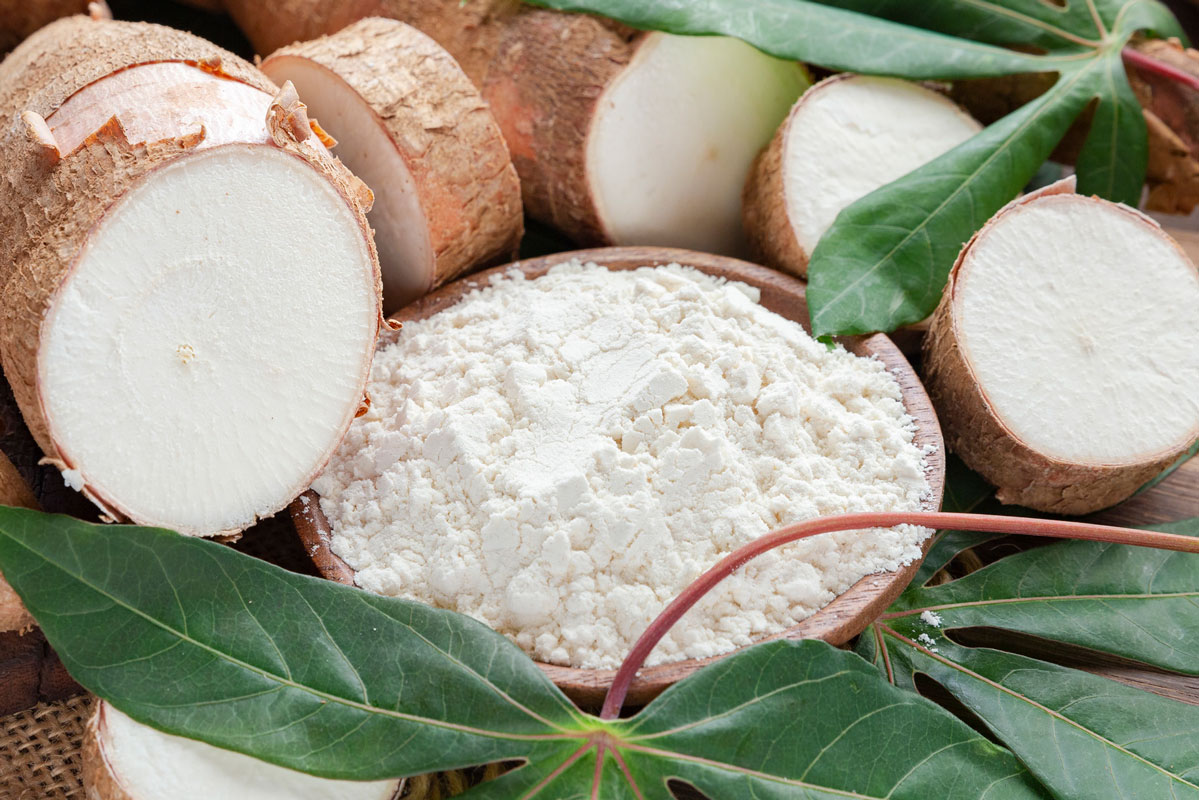
Vietnam has become a key global sourcing hub for modified tapioca starch, offering a wide range of food-grade and industrial-grade solutions tailored to diverse applications.
Beyond competitive pricing, Vietnam stands out for its consistent quality, flexible customization, and export-ready supply chains, making it an increasingly preferred origin for international buyers.
Whether you are a food or pharmaceutical manufacturer, paper mill, adhesive producer, textile factory, or industrial distributor, understanding the specifications, functionality, and sourcing process is essential to selecting the right modified tapioca starch solution.
What Is Vietnam Modified Tapioca Starch?
Vietnam modified tapioca starch is native cassava starch that has been altered through physical, enzymatic, or chemical processes in Vietnam to enhance its performance in specific applications.
These modifications improve:
- Heat and processing stability
- Freeze–thaw resistance
- Shear resistance
- Viscosity control
- Gel strength
- Adhesion and binding
- Texture and clarity
Thanks to its neutral taste, high purity, and naturally gluten free profile, modified tapioca starch made in Vietnam is widely used across both food and industrial sectors.
Functional Properties of Vietnam Modified Tapioca Starch
Different modification technologies are designed to deliver targeted functional performance:
- Controlled thickening and viscosity behavior
- Water retention and stabilization
- Freeze–thaw stability in frozen products
- Film‑forming capability for coatings and paper
- Strong binding and adhesion properties
- Improved texture and mouthfeel in food systems
For manufacturers, selecting the right modified tapioca starch is not just about specification, it is about functional performance under real processing conditions.
Vietnam’s Modified Tapioca Starch Industry
Vietnam is one of the world’s leading producers of cassava and tapioca starch, supported by:
- A large and stable agricultural base
- Competitive production costs
- A well-established native starch processing industry
- Strong export infrastructure
Over the past decade, Vietnam’s modified tapioca starch sector has expanded steadily, driven by increasing global demand for:
- Functional starches in food and pharmaceutical applications
- Cost-effective alternatives to corn and potato starch
- Industrial starch applications in paper, adhesives, and textiles
- More diversified and resilient supply chains
While Vietnam’s native tapioca starch industry is highly developed, the modified starch sector is still evolving, with ongoing investments in processing technology and product development.
Vietnamese manufacturers today supply a full range of modified tapioca starches designed for both food and industrial applications, including:
- Food-grade modified tapioca starches
- Industrial-grade modified tapioca starches
- Physically modified tapioca starches
- Chemically modified tapioca starches
- Enzyme-modified tapioca starches
- Pregelatinized tapioca starches
- Application-specific functional blends
In practice, Vietnam is particularly strong in supplying cost-effective, application-driven tapioca starch solutions, with growing capabilities in customization based on viscosity, stability, and functional performance.
Types of Modified Tapioca Starch Produced in Vietnam
Vietnamese manufacturers offer a broad range of modified tapioca starches designed for food, pharmaceutical, and industrial applications.
At Golinse, we focus on supplying selected high‑demand and application‑driven starch grades, including:
Main Starches (E‑Number Modified Tapioca Starches)
| Type | Key Properties | Typical Applications |
|---|---|---|
| E1404 – Oxidized Starch |
Lower viscosity Improved film-forming properties Good surface strength and adhesion |
Paper coating Adhesives Textile sizing |
| E1412 – Distarch Phosphate |
Improved stability under heat and shear Better viscosity control |
Noodles Sauces, soups Snacks |
| E1413 - Phosphated Distarch Phosphate |
Increase total dietary fiber Reduce calory Increase smooth and shiny surface (noodles) Not affect flavor of final product |
Noodles, Cookies Bakery products Chocolate cakes |
| E1414 – Acetylated Distarch Phosphate |
Excellent freeze–thaw stability Smooth and stable texture |
Frozen foods Dairy products Sauces |
| E1420 – Acetylated Starch |
Improved clarity Smooth texture |
Instant/wet noodles Frozen foods |
| E1422 – Acetylated Distarch Adipate | High stability under severe processing conditions |
Canned foods Ready meals |
| E1450 – Starch Sodium Octenyl Succinate |
Good emulsion stability Hydrophobic characteristic |
Mayonnaise Dairy products Nutritional beverages |
Other Tapioca Starches (Functional & Specialty Starches)
| Type | Key Properties | Typical Applications |
|---|---|---|
| Pregelatinized Tapioca Starch |
Cold-water soluble Instant thickening |
Instant foods Pharmaceuticals Adhesives |
| Resistant Tapioca Starch (RS4) |
Increase total dietary fiber Reduce calory, fat absorption, toughness Not affect flavor of final product |
Noodles, pasta, cookies, bakery Chocolate cakes Cinnamon rolls, muffin |
Typical Specifications of Vietnam Modified Tapioca Starch
Typical specifications may vary depending on the type of modification and application requirements.
| Parameter | Specification Range |
|---|---|
| Moisture | Max 13–14% |
| pH | 4.5–7.0 |
| Viscosity | Customizable |
| Whiteness | Min 85–90% |
| Slurry residue | Max 0.02% |
| SO₂ | Max 30ppm |
| Microbiology | Meets food-grade standards |
Regulatory and Food Safety Compliance
Golinse supplies modified tapioca starches sourced from qualified manufacturers in Vietnam that typically comply with internationally recognized standards, including:
- HACCP
- FSSC 22000
- Halal and Kosher
- ISO 9001
This certification framework ensures consistent quality, full traceability, and compliance with global food‑safety regulations across major export markets.
Applications of Vietnam Modified Tapioca Starch
Vietnam modified tapioca starch is widely used across multiple industries, each requiring specific functional properties and performance characteristics.
Food Industry
| Applications | Key Benefits |
|---|---|
|
Sauces, soups, gravies Dairy products Processed meat Confectionery Instant foods Bakery fillings |
Improved texture and mouthfeel Enhanced stability under heat and storage Freeze–thaw resistance Consistent product quality |
Pharmaceutical Industry
| Applications | Key Benefits |
|---|---|
|
Tablet binders Disintegrants Fillers and excipients Controlled-release formulations |
Good compressibility and binding properties Controlled disintegration performance High purity and neutral characteristics Compatibility with APIs |
Paper & Packaging Industry
| Applications | Key Benefits |
|---|---|
|
Surface sizing Coating Wet-end processes |
Increased paper strength Better printability Improved surface smoothness |
Adhesive Industry
| Applications | Key Benefits |
|---|---|
|
Corrugated board adhesives Paper lamination Wood bonding |
Strong bonding performance Adjustable viscosity Cost-effective alternative to synthetic adhesives |
Textile Industry
| Applications | Key Benefits |
|---|---|
|
Warp sizing Finishing agents |
Improved yarn strength Better weaving efficiency |
Construction Industry
| Applications | Key Benefits |
|---|---|
|
Tile adhesives Wall putty Gypsum systems |
Enhanced adhesion Improved water retention |
Packaging & Documentation for Export
For experienced importers, packaging and documentation are not just formal requirements, they directly influence logistics efficiency, customs clearance speed, and the final landed cost.
Packaging Options
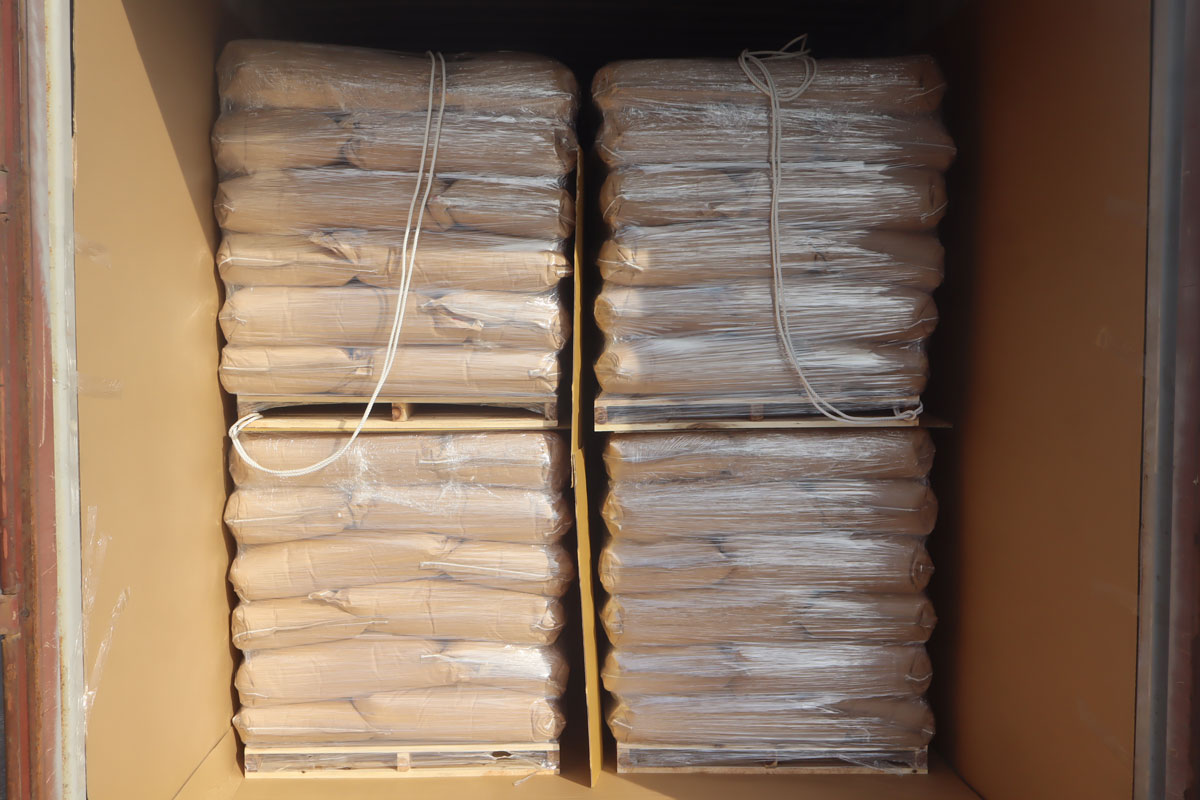
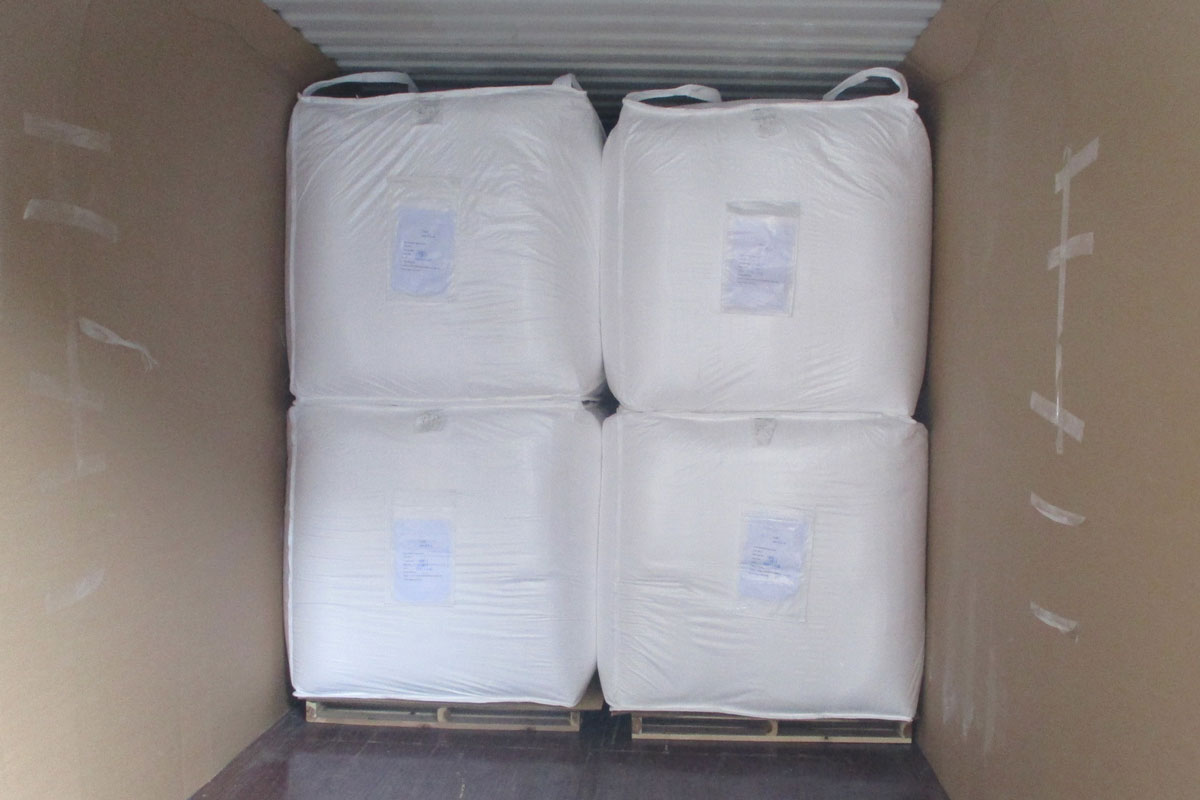
Vietnamese suppliers typically offer flexible packaging formats depending on market requirements and handling systems:
- 20–25 kg paper bags
- 500–1000 kg jumbo bags
OEM / private label options are available, including customized bag design, labeling, and branding to support distributors and private‑label brands.
Export Documentation
Standard export documents:
- Commercial Invoice
- Packing List
- Bill of Lading
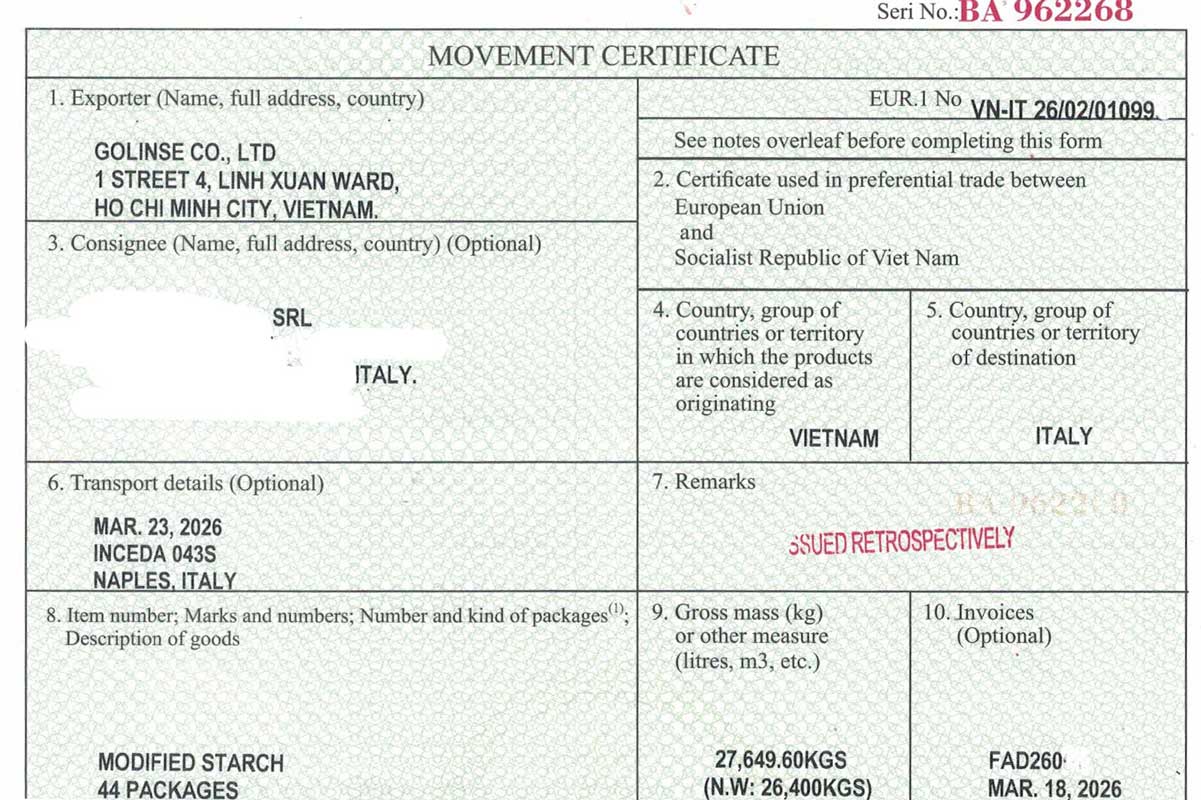
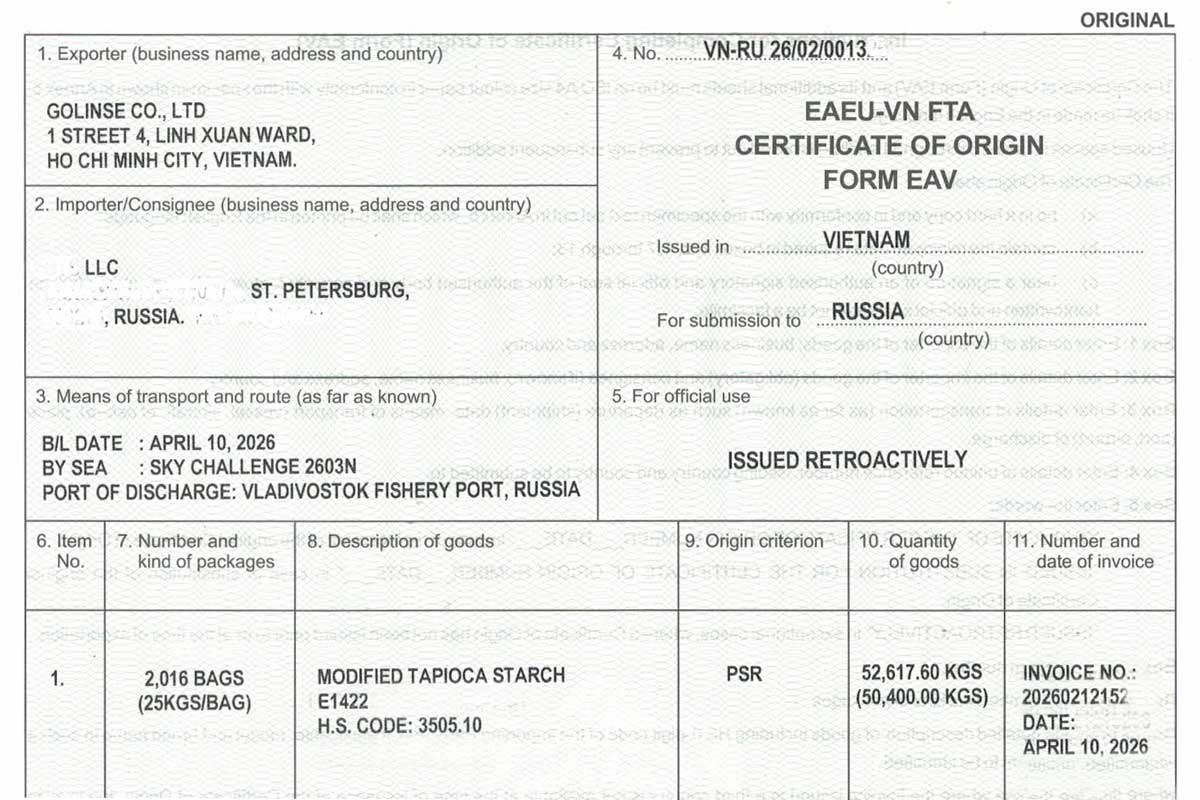
- Certificate of Origin (CO)
- Phytosanitary Certificate (if required by destination).
Quality and compliance documents:
- Certificate of Analysis (COA)
- MSDS / SDS
- Halal / HACCP / ISO certificates (from manufacturer)
HS Code: 3505.10
Description of goods: Modified starch or modified tapioca starch.
Accurate documentation and timely issuance play a critical role in ensuring smooth customs clearance and minimizing delays across the supply chain.
Key Cost Factors When Importing Modified Tapioca Starch from Vietnam
For experienced buyers, the total landed cost goes far beyond the product price. In practice, several Vietnam specific factors can significantly influence the final import cost:
- Packaging efficiency and container utilization
- Freight timing and seasonal rate fluctuations
- Raw cassava price cycles in Vietnam
- Import duties and destination‑country taxes
In many cases, optimizing these factors reduces total cost more effectively than negotiating unit price alone.
Who Should Import Modified Tapioca Starch from Vietnam?
Vietnam is a suitable sourcing origin for a wide range of industries, particularly:
- Food manufacturers (dairy, sauces, bakery, processed foods)
- Pharmaceutical manufacturers (binders, disintegrants, excipients)
- Paper mills and packaging producers
- Adhesive and corrugated board manufacturers
- Textile mills and finishing operations
- Chemical distributors and industrial users
- Private label brands and OEM buyers
- Companies seeking alternatives to corn or potato starch
Supplier of modified tapioca starch in Vietnam is especially attractive for buyers seeking:
- Stable and consistent quality
- Flexible MOQ and order volumes
- OEM and private label packaging
- Reliable monthly supply capacity
- Competitive and diversified sourcing options
- Opportunities to reduce import duties through Vietnam’s trade agreements (EVFTA, VN‑EAEU FTA, AFTA, ACFTA, AANZFTA, AIFTA, etc.)
Why Vietnam Modified Tapioca Starch Is a Strong Choice
Vietnam's suppier of modified tapioca starch offers a compelling combination of:
- Consistent quality
- Wide product range
- Flexible customization
- Strong export capability
- Reliable supply
- Opportunities to reduce import duties through Vietnam’s trade agreements
For global buyers, Vietnam represents a strategic, flexible, and cost effective sourcing solution in the evolving starch market.
Looking for Modified Tapioca Starch from Vietnam?
If you are looking for a reliable supplier of modified tapioca starch in Vietnam, feel free to contact us to discuss your requirements.
We can provide:
- Application-matched product specifications
- Samples or batch-specific COA for evaluation
- Flexible packaging and OEM/private label options
- Competitive quotations based on your volume and shipping terms